IELTS Listening Section 1: Ultimate Guide to Form Completion & Avoiding Spelling Traps
Master Names, Numbers, Postcodes, and Self-Correction Distractors for a Perfect 10/10
For many IELTS candidates, Section 1 (often referred to as Part 1) of the Listening test is viewed as the easiest segment. On the surface, it seems straightforward: a conversation between two people in an everyday social context—such as booking a hotel room, renting an apartment, or registering for a library card. However, this apparent simplicity is exactly why it is a psychological minefield.
Losing points in Section 1 due to careless spelling mistakes, missing a single digit in a phone number, or falling victim to a classic conversational distractor can severely damage your overall band score. To achieve a Band 7.5, 8.0, or a perfect 9.0, you must aim for nothing less than a perfect 10 out of 10 in this opening section.
!-- ===== AD 1 ===== -->
1. The Anatomy of Form Completion
Form completion tasks require you to fill in missing gaps within a structured document, application, or factual summary block based on the audio dialogue. Before you even hear the first word, your primary weapon is the preparation time given at the beginning of the section.
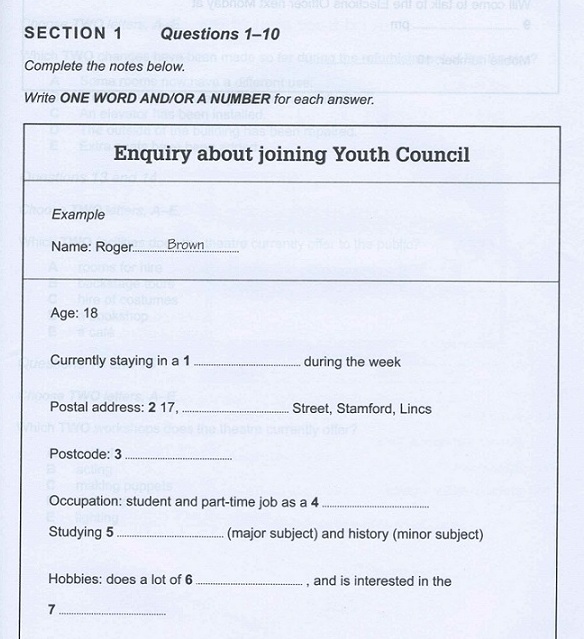
Figure 1: Example of a classic Section 1 structural layout. Notice how questions alternate between names, complete postcodes, and specific single-word occupations.
The Importance of "Word Count" Rules
Every form completion exercise begins with strict instructions regarding word boundaries. Ignoring these rules guarantees a zero for that question, regardless of whether the fact you wrote was accurate.
| Instruction Type |
What it Actually Means |
Examples (Valid vs Invalid) |
| ONE WORD ONLY |
Exactly one individual word. No numbers, no extra descriptions. |
✓ Silk | ✗ Pure silk |
| ONE WORD AND/OR A NUMBER |
Can be a single word, a single number, or one word combined with a number. |
✓ 15th September | ✗ 15th of September |
| NO MORE THAN TWO WORDS |
Maximum of two words. Hyphenated words count as a single word! |
✓ Up-to-date report (1 word via hyphen) |
2. The 4-Step Professional Processing Framework
To ensure you avoid missing key data pieces during the fast delivery of answers, execute this specific sequence for every blank space on your worksheet:
Step 1: Predict the Grammatical Category
Scan the text surrounding the blank line. Determine instantly whether you are listening for a proper noun (e.g., a surname), a monetary cost, a day of the week, or an exact physical location marker.
Step 2: Isolate Underlying Synonyms
If the form lists "Occupation:", the speaker will rarely say that exact word. Instead, expect them to ask "What kind of work do you do?" or "Are you employed at the moment?".
Step 3: Keep the Pen Hovering Post-Answer
Write down the initial response immediately, but do not stop tracking the conversation. Keep your pen ready over the sheet for at least 5-10 additional seconds to catch any unexpected conversational pivots or modifications.
Step 4: Audit Final Spelling Structures
During the check phase at the end of the test, quickly verify that plural nouns have their final 's', that your handwriting clearly distinguishes '5' from 'S', and that you haven't double-written unnecessary articles.
3. Defeating Spelling Traps: Surnames & Uncommon Names
When an audio track introduces an unusual name, the speaker will almost always spell it out. However, examiners rely on specific phonetic overlaps to trip up unsuspecting candidates. Let's look at the most common spelling traps:
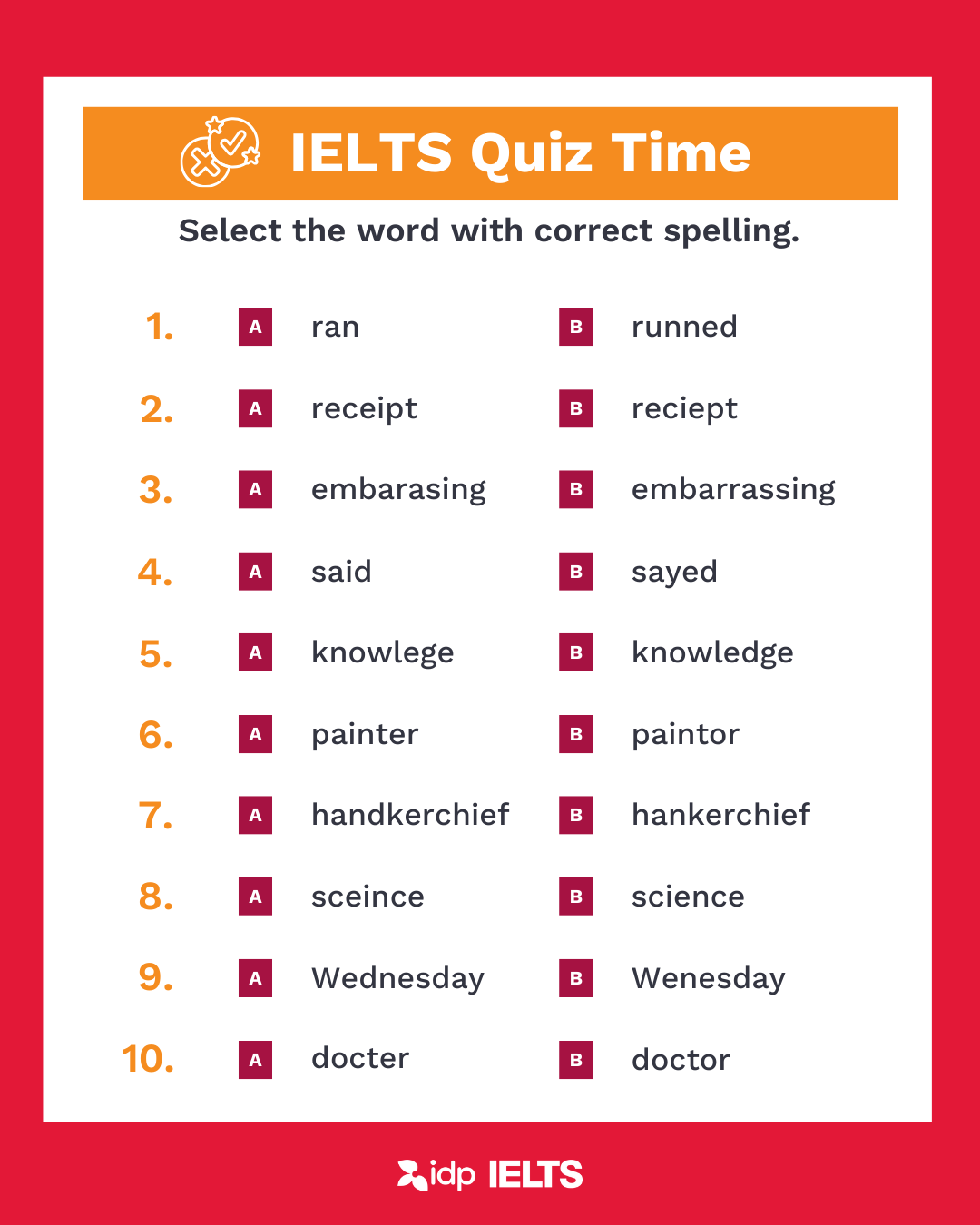
Figure 2: Common spelling mistakes monitored closely by official IDP/British Council assessment teams. Accurate vowel structures are non-negotiable.
⚠️ The Critical Letter Clashes:
- A vs E vs I: In British, Australian, and Kiwi accents, the pronunciation of "A" /eɪ/, "E" /iː/, and "I" /aɪ/ can blur together if you are nervous.
- G vs J: Many language backgrounds confuse /dʒiː/ (G) and /dʒeɪ/ (J). Remember: "J" has an 'ay' sound at the end, while "G" rhymes with "Bee".
- Y vs I: Speakers frequently spell names like Smythe as "S-M-Y-T-H-E". Ensure you register "Y" instantly instead of writing "I".
The Double-Letter Trick
When a name contains consecutive identical letters, speakers will say "double [letter]" instead of repeating the character. For instance:
"My surname is Gallagher. That's G-A-L-L-A-G-H-E-R." → Audio: "G - A - double L - A - G - H - E - R"
4. Mastering Numbers and Numerical Sequences
Numerical values show up in phone numbers, passport references, card numbers, and policy identifiers. Missing a single digit destroys the whole score for that slot.
The "Teens" vs "Tens" Phonetic Trap
This is perhaps the longest-running trick in the official IELTS framework. The distinction relies entirely on syllable stress:
- Thirteen (/θɜːˈtiːn/) vs. Thirty (/ˈθɜːti/) — 13 places heavy stress on the final syllable, whereas 30 drops off quickly.
- Fifteen (/fɪfˈtiːn/) vs. Fifty (/ˈfɪfti/)
- Nineteen (/naɪnˈtiːn/) vs. Ninety (/ˈnaɪnti/)
5. Frequently Asked Questions (FAQ)
Here are the exact procedural questions candidates regularly ask regarding technical marking criteria in Listening Part 1:
Q: Does spelling count in the IELTS Listening module?
A: Absolutely. If a word is spelled incorrectly according to standard English rules, the answer is marked completely wrong. Both British and American spelling conventions are accepted (e.g., "programme" vs "program" or "theatre" vs "theater"), but you must not stitch random non-standard fragments together.
Q: Should I write my answers in all CAPITAL letters or lowercase?
A: We strongly recommend using ALL CAPITAL LETTERS for your final paper or input fields. Writing "LONDON" instead of "London" eliminates the risk of losing marks for missing an uppercase starting character on proper nouns.
Q: How do hyphens affect the final word limit constraints?
A: Words bound together by a hyphen (such as "up-to-date" or "first-class") are systematically tabulated as one word. This is an incredibly helpful trick to remember when navigating tight "ONE WORD ONLY" guidelines.
Q: What happens if a speaker gives a post code with spaces? Should I include them?
A: Spaces inside alphanumeric structures do not alter your score. However, writing the letter and number strings sequentially without processing errors is the single most critical factor.
6. Interactive Practice Exercise
Test your mastery right now. Read through the script snippet below and attempt to extract the clean values required for a mock Customer Profile Form.
📋 Practice Questions:
- Customer Surname: _______________
- Contact Number: _______________
- Postcode: _______________
👁️ Click Here to Reveal Transcript & Answers
Dialogue: "My family name is Macalister. Let me spell that out: M-A-C-A-L-I-S-T-E-R. You can contact me at 01632 960855. No, adjust that final bit, it's double eight five. My post code in North London is N-W-one, zero, E-G."
Correct Answers:
- 1. MACALISTER (Must match spelling perfectly)
- 2. 01632 960885 (Adjusted based on "double eight five")
- 3. NW1 0EG (Alphanumeric structure preserved)
🗺️ Essential Navigation Links
Explore our official resources to optimize your entire preparation journey.





Comments