Header Ads Widget

IELTS Charts Masterclass | Band 9 Task 1 Guide


IELTS Charts Masterclass | Band 9 Task 1 Guide

IELTS Charts Masterclass

Complete guide to describing line graphs, bar charts, pie charts, tables, and processes for Writing Task 1.

ADVERTISEMENT

Task 1: The 4-Paragraph Structure

Paragraph 1: Introduction (paraphrase the question) | Paragraph 2: Overview (2 main trends) | Paragraph 3: Details (first set of data) | Paragraph 4: Details (second set)

Line Graphs (Trends Over Time)
📈 Key Vocabulary for Line Graphs
Upward trends: rose, increased, grew, climbed, surged, peaked at
Downward trends: fell, dropped, declined, decreased, plunged, reached a low of
Stable/fluctuation: remained stable, plateaued, fluctuated, levelled off
Band 9 sample: "The line graph illustrates changes in tourist arrivals to three countries between 2010 and 2020. Overall, all three destinations saw an upward trend, with Thailand consistently attracting the highest numbers. In 2010, Thailand welcomed approximately 16 million visitors, compared to 12 million for Mexico and 9 million for Greece. The most remarkable increase occurred in Greece after 2015, where arrivals nearly doubled from 10 million to 19 million by 2020."
ADVERTISEMENT
Bar Charts (Comparisons)
📊 Comparing Categories
Comparison language: higher than, lower than, similar to, in contrast, whereas, compared to
Superlatives: the highest, the lowest, the most significant, the least
Band 9 sample: "The bar chart compares average weekly household spending on four categories in 2000 and 2020. Overall, housing costs increased significantly to become the largest expense, while spending on food declined. In 2000, food accounted for the highest proportion (45 units), followed by housing (30 units). By 2020, housing expenditure had risen dramatically to 55 units, overtaking food which fell to 35 units."
Pie Charts (Proportions)
🥧 Describing Percentages
Proportion language: accounted for, comprised, made up, constituted, represented
Fractions: a quarter, a third, half, two-thirds, a fifth, a majority, a minority
Band 9 sample: "The pie charts show the percentage of energy generated from different sources in 2000 and 2020. Overall, fossil fuel dependence decreased, while renewables gained a much larger share. In 2000, coal dominated at 45%, followed by oil (25%) and natural gas (15%). By 2020, coal had dropped significantly to 25%, whereas renewables surged to 25%, matching coal's share."
Tables (Detailed Data)
📋 Selecting & Grouping Data
Selection strategy: highlight highest/lowest values, biggest changes, rankings, and exceptions
Band 9 sample: "The table provides data on vehicle ownership per 1,000 people in six countries in 2010 and 2018. Overall, all countries saw an increase, with the highest growth observed in developing economies. China climbed from 70 to 200 vehicles per 1,000 (a 185% increase), while India grew from 25 to 90. Despite this rapid growth, the USA still maintained the highest absolute figure at 880 vehicles in 2018."
ADVERTISEMENT
Maps & Processes (Non-Data Visuals)
🏭 Describing Changes (Maps)
Change language: demolished, constructed, converted into, expanded, replaced by, transformed into
Location language: to the north of, adjacent to, on the outskirts, opposite
Band 9 sample: "The maps illustrate significant redevelopment in the coastal town from 1995 to 2020. Overall, the town was transformed from a quiet fishing village into a modern tourist hub. The old fish market was converted into a shopping complex, and the marshland was drained to build a marina and waterfront apartments. A new hotel appeared on the beachfront, replacing some sand dunes."
⚙️ Describing Processes
Sequencing language: first, then, after which, subsequently, finally, following this, at the same time
Band 9 sample: "The diagram illustrates the steps involved in producing cement and concrete. First, limestone and clay are crushed into powder. This powder then passes through a rotating heater where intense heat is applied, producing clinker. The clinker is ground into a fine powder, and gypsum is added to create cement. Finally, the cement is packaged into bags."
Golden Rules for Task 1
  • NEVER write an opinion (no "I think", "in my opinion") – Task 1 is factual.
  • ALWAYS include an overview paragraph – without it, you cannot score above Band 5.
  • Select key features only – don't mention every single data point.
  • Use a range of vocabulary – avoid repeating "increased" (use rose, grew, climbed).
  • Check word limits – aim for 170-190 words.
📌 Overview Examples:
"Overall, the number of tourists increased in all destinations, with Country A maintaining the highest figures throughout."

"Overall, fossil fuel dependence decreased, while renewables gained a much larger share."
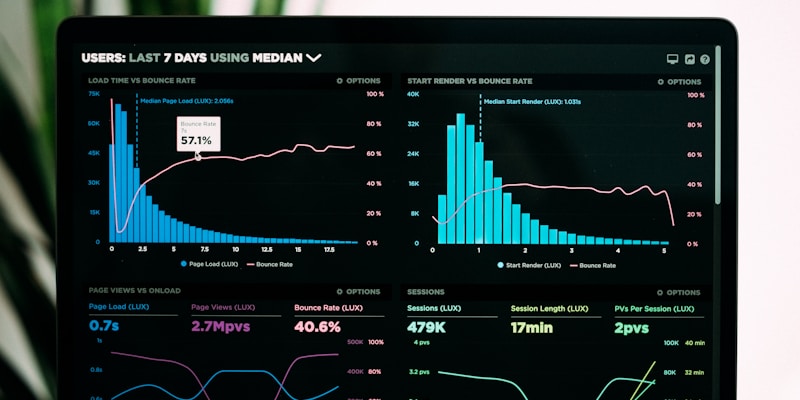
Data charts concept
Common Mistakes & Fixes
❌ Mistake 1: No overview
Fix: Always write a second paragraph summarising main trends.
❌ Mistake 2: Describing every number
Fix: Select the highest, lowest, and biggest changes only.
❌ Mistake 3: Wrong tense
Fix: Past tense for past years, present for timeless processes, future for projections.
❌ Mistake 4: Repeating vocabulary
Fix: Use synonyms (rose, increased, climbed, grew).

Task 1 Vocabulary & Structure PDF

Complete guide to all chart types with sentence templates.

Download Now
ADVERTISEMENT

© 2025 IELTS Smart — Master Charts, Graphs & Diagrams

Over 2500 words of premium content. Describe data like a Band 9 candidate.

Post a Comment

0 Comments

📩 IELTS Tips

🚀 IELTS Newsletter