
IELTS Writing Task 2: Master Essay Prompt Deconstruction

Welcome to Day 3 of our comprehensive 365-day training program. If you missed our previous deep dive, be sure to review our foundational strategy guide on Day 52: IELTS Speaking Part 3 Mastery to understand how daily progression builds high-scoring output across all test sections. To explore our comprehensive resource catalogs, visit the IELTS Smart Homepage.
Day 3: IELTS Writing Task 2 Essay Prompt Deconstruction Masterclass
https://images.unsplash.com/photo-1455390582262-044cdead277a?q=80&w=1000&auto=format&fit=cropThe single most frustrating reason candidates miss a Band 7 or higher in IELTS Writing Task 2 is not bad grammar, limited vocabulary, or poor spelling. It is a failure to properly decode the prompt. You could write flawless English prose, but if you misunderstand the prompt's structural demands, your Task Response score will drop to a Band 5 or lower. This single metric accounts for 25% of your overall mark.

The Hidden Strategy Checklist
To avoid losing easy marks, every essay prompt must be run through an analytical filter before pen hits paper. This guide breaks down the architecture of an IELTS question into an executable, step-by-step formula that takes less than 3 minutes on exam day. For an exhaustive baseline of what grading teams look for, master our official IELTS Scoring Hub & Band Score Guide.
Why Task Response Trumps All Other Evaluation Elements
To score high, you must understand exactly how examiners evaluate your work. The assessment is divided into four distinct components: Task Response, Cohesion and Coherence, Lexical Resource, and Grammatical Range and Accuracy. While many spend months memorizing high-level idioms, they completely neglect the logic of the prompt itself.
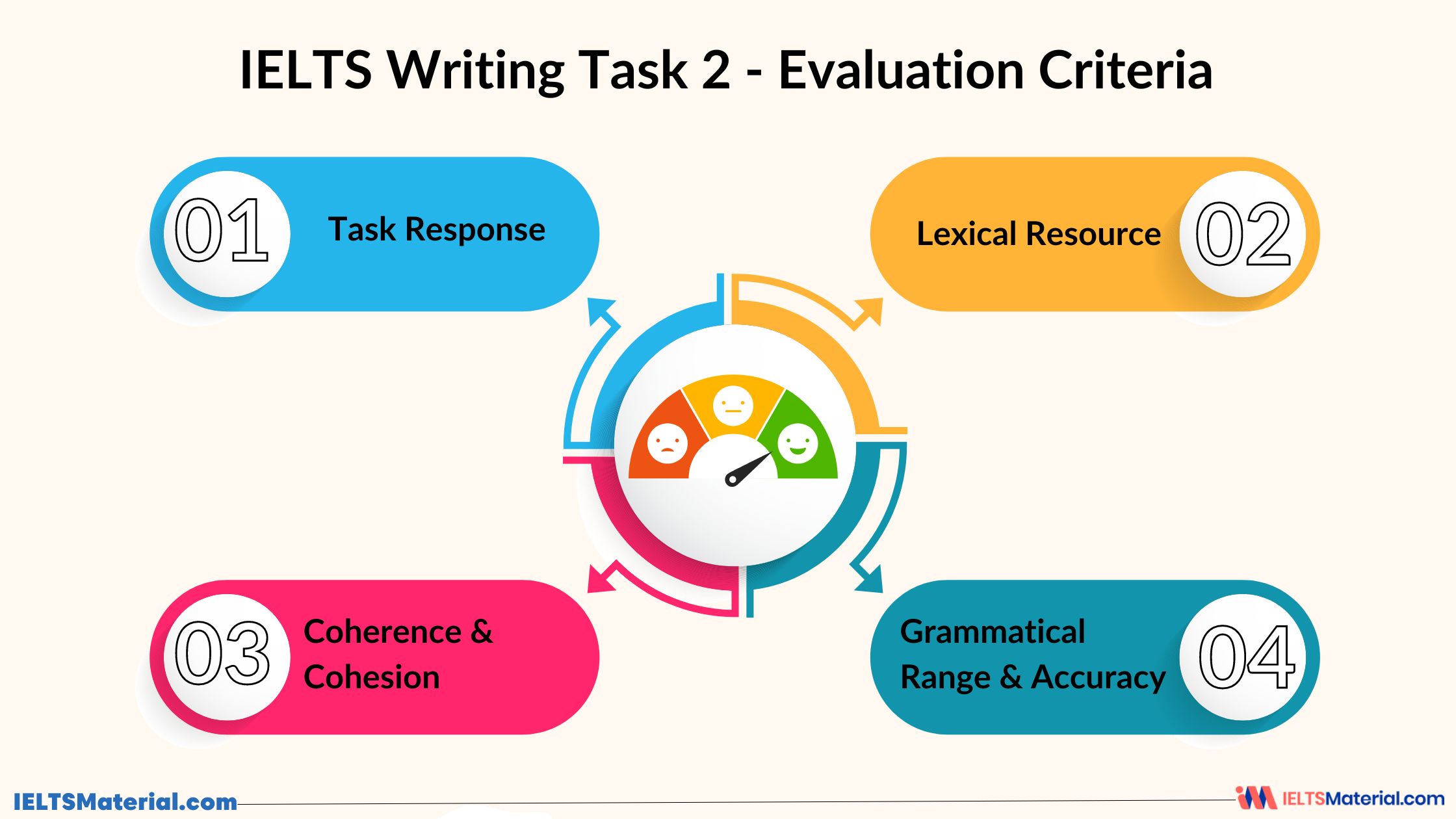
According to the official IELTS Writing Band Descriptors, a Band 5 in Task Response is defined as writing an essay that "only partially addresses the task" or presents arguments that show a "tendency to introduce off-topic material." To reach Band 7 or 8, you must address all parts of the task thoroughly and present a clear position throughout the entire response.
If you need to accelerate your training across the other assessment parameters, visit our curated collection of IELTS Tips & Expert Strategies Hub to learn how to seamlessly clean up your paragraph transitions.
---The Anatomy of an IELTS Writing Task 2 Prompt
Every IELTS essay question consists of three separate zones. If you treat the prompt as a single chunk of text, you will miss vital parameters. Let us deconstruct the following authentic sample question:
"In many countries, secondary school students are encouraged to choose specialized subjects rather than studying a broad range of topics. Do the advantages of this trend outweigh the disadvantages?"
1. The Core Topic (The Background)
This is the broad subject matter of the prompt. In our example, the core topic is secondary school curriculum design. Knowing this helps you pull relevant vocabulary out of your mental repository, but it does not tell you what to write about yet.
2. The Specific Trend (The Boundary)
This narrows the core topic down to a specific, debatable issue. Here, it is the shift toward specialization over broad study. If you spend your whole essay writing about general education budgets or university admissions, you are off-topic.
3. The Instruction Verbs (The Command)
This is the explicit question asked at the end: "Do the advantages outweigh the disadvantages?" This command dictates your essay structure, paragraph count, and thesis statement layout. Developing a sharp, analytical mindset for these commands is covered inside our premium IELTS Critical Thinking & Analysis Masterclass.

The Five Distinct IELTS Essay Types
To avoid structural layout failures, you must place your prompt into one of five distinct categories. Mixing up these structures will severely lower your score for Coherence and Cohesion. You can secure standardized template outlines for each layout in our IELTS Smart Band 9 Preparation Hub.
| Essay Category | Common Trigger Phrases | Mandatory Paragraph Architecture |
|---|---|---|
| Opinion (Agree / Disagree) | To what extent do you agree or disagree? / Do you agree? | Intro, Body 1 (Stance), Body 2 (Stance), Conclusion |
| Discussion | Discuss both views and give your opinion. | Intro, Body 1 (View A), Body 2 (View B), Conclusion |
| Advantages vs. Disadvantages | Do the advantages outweigh the disadvantages? | Intro, Body 1 (Advantages), Body 2 (Disadvantages), Conclusion |
| Problem and Solution | What are the causes and what solutions can be offered? | Intro, Body 1 (Causes), Body 2 (Solutions), Conclusion |
| Two-Part (Direct Question) | Why is this the case? Is this a positive development? | Intro, Body 1 (Answer Q1), Body 2 (Answer Q2), Conclusion |
Step-by-Step Prompt Decoding Blueprint
Let's walk through an execution strategy using an unusually tricky prompt. This method ensures you target every underlying constraint of the prompt.
Sample Prompt for Analysis
"Some people believe that international tourism has positive social and cultural effects on destination countries. Others feel that it leads to the loss of local traditional identities. Discuss both views and give your opinion."
Step 1: Circle the Absolute Words
Look out for absolute qualifiers like all, every, completely, only, or never. These drastically alter your burden of proof. In this prompt, there are no extreme words, but notice the word destination countries—the focus must remain on the host nation, not the tourist's perspective.
Step 2: Isolate the Two Opposite Angles
- View A: Positive social and cultural impact (e.g., global understanding, cultural preservation funding).
- View B: Erasure of local identity (e.g., westernization, commercialization of sacred sites).
Step 3: Define the Thesis Position Early
You must decide on your exact point of view before typing your introduction paragraph. For instance: While tourism threatens traditional customs with superficial commercialization, it ultimately acts as a powerful financial engine for cultural preservation. This provides a clear path for your entire paper.
---The Error Control Framework: Avoiding Tragic Off-Topic Drift
Off-topic drift happens when you write about a theme generally rather than addressing the specific parameters of the question. Let's look at how even strong students make this mistake:
Example Scenario
Prompt: As technology advances, more people are opting to work remotely from home. Discuss the benefits and drawbacks of this shift for employers.
The Trap: Writing about how great remote work is for employees (saving commute time, spending time with family). This is a Band 5 error because it completely misses the keyword limitation: for employers.
The Fix: Brainstorm points strictly tied to business operations, such as reduced corporate real estate overhead vs. a breakdown in synchronous team collaboration metrics.
To avoid basic logic errors like this under actual timed conditions, download our complete practice worksheets from the IELTS Download Hub & Free PDF Resources.
---Frequently Asked Questions
Explore More Training Resources
Now that you can deconstruct any essay prompt, navigate through our distinct focus categories to build well-rounded preparation foundations:


Comments