
Rapid Skimming Techniques: How to Read a 900-Word Text in Under 2 Minutes to Locate Key Ideas

Rapid Skimming Techniques: How to Read a 900-Word Text in Under 2 Minutes to Locate Key Ideas
A data-driven masterclass on cognitive text extraction, mechanical pacing, and breaking the baseline word-by-word barrier under exam conditions.
Time is the ultimate structural gatekeeper in high-stakes professional evaluations, academic certifications, and intensive data environments. When faced with a sprawling, dense, 900-word academic or analytical passage, the deeply ingrained instinct of most readers is to process information linearly—meticulously moving from left to right, word by word, line by line. While this method serves elementary reading development, it introduces a severe structural liability when operating within strict temporal boundaries.
The numbers speak for themselves. The average literate adult reads prose at a baseline rate of approximately 200 to 300 words per minute (WPM). Under these parameters, performing a traditional cover-to-cover reading of a 900-word text requires between three and four and a half minutes. When an assessment or an emergency brief limits your total per-text allocation to a handful of minutes, relying on a linear approach completely consumes your time budget. It leaves zero bandwidth for semantic processing, contextual analysis, target searching, or strategic problem-solving.
To eliminate this bottleneck, you must execute a fundamental cognitive shift: transition from passive word consumption to active, strategic visual extraction. True speed reading mastery does not mean your eyes pass over text faster; it means training your brain to ignore syntactic noise and selectively filter out structural filler. By learning how to skim a 900-word passage in under 120 seconds, you construct a comprehensive conceptual map of the information layout. This ensures you know exactly where to perform a microscopic, focused analysis later without wasting precious seconds wandering aimlessly through dense paragraphs.

Figure 1: Laboratory eye-tracking comparison detailing traditional linear reading fixations versus high-velocity skipping pathways designed to map structural logic.
1. The Neurobiology of Text Intake: Saccades, Fixations, and Span
To fundamentally alter your reading velocity, you must first understand the mechanical constraints of human vision. When you read, your eyes do not glide smoothly along a line of printed text. Instead, they move in a series of rapid, jerky jumps called saccades. Between these jumps, your eyes briefly come to a complete rest for a fraction of a second. This pause is known as a fixation.
It is exclusively during the fixation phase—which typically lasts between 200 to 250 milliseconds—that your brain absorbs and processes visual data. In untrained readers, a single fixation captures only a narrow cluster of characters, often just one or two words. If your eyes pause on every individual word across a 900-word article, you incur an automatic mechanical overhead of 900 separate fixations. When you factor in the physical transit time of the saccades and the cognitive processing delays, breaking past a standard reading velocity becomes physically impossible.
Accelerated skimming directly bypasses this mechanical limitation by expanding your effective peripheral vision span. Instead of focusing your macular vision squarely on a single word, you train your brain to read word clusters. Your eyes drop selectively onto the page, treating whole phrases as single typographic units. By wider-angle tracking, you reduce the required fixations per line from six or seven down to a targeted two or three, instantly doubling your processing capacity without sacrificing semantic coherence.
2. The Tri-Phasic Rapid Skimming Framework
High-speed text navigation is a highly calculated, aggressive sorting system. To reliably digest the core logical arguments of a 900-word passage in less than 120 seconds, you must divide your time into three distinct, carefully timed phases. This approach prevents you from slipping back into passive reading habits.
Phase A: Contextual Orientation & Schema Activation (0 – 20 Seconds)
Do not look at the body text during these first twenty seconds. Focus your attention entirely on the macro-metadata: the primary title, any secondary subtitles, the author block, and the opening paragraph. Reading the introduction completely primes your brain's network. It triggers your stored background knowledge (or schema) regarding the subject matter, enabling your mind to accurately anticipate the upcoming structural arguments before your eyes even scan them.
Phase B: Paragraph Boundary Isolation (21 – 90 Seconds)
Analytical and academic writing follows predictable structural laws. The first sentence of a paragraph—the topic sentence—is engineered to voice the central thesis or claim of that section. Conversely, the final sentence serves to summarize the assertion or create a logical bridge to the next point. During this seventy-second window, sweep your eyes horizontally across only these outer boundaries. Let your peripheral vision trail down over the internal supporting evidence, processing names or numbers without pausing to read them line by line.
Phase C: Signpost Anchor Traversal (91 – 120 Seconds)
Spend your final thirty seconds executing a fast vertical sweep straight down the center of each column or page. In this phase, you are hunting exclusively for linguistic turning points, text breaks, and logical signposts. Train your eyes to catch switchback phrases like "In contrast," "On the other hand," "Consequently," "Therefore," and "Crucially." These markers alert you to sudden shifts in the author's logic, showing you where a thesis is defended, altered, or disproven.
📊 Systematize Your Visual Training Protocol
Isolating these structural text elements takes dedicated practice under timed conditions. To practice tracking word groups and layout outlines across varying difficulty tiers, dive into our centralized preparation terminal: IELTS Reading Hub: Unlock Band 9.
3. Eliminating the Inner Voice: Overcoming Subvocalization
The largest cognitive barrier blocking you from hitting rapid skimming speeds is a deeply rooted habit known as subvocalization. Subvocalization is the internal, silent articulation of every single word inside your mind as your eyes pass across the printed page. This habit forms early in childhood development when we are taught to read aloud by sounding out letters syllable by syllable.
While subvocalization helps early learners process sentence structures, it acts as a severe speed ceiling for advanced readers. Because you are essentially speaking the words in your head, your reading rate is mechanically tied to your maximum spoken verbal speed—typically between 150 to 250 words per minute. Since scanning a 900-word layout in under 2 minutes requires a minimum processing velocity of 450 words per minute, you must learn to bypass this mental auditory loop entirely.
To silence this internal voice, your brain must learn to process symbols purely visually rather than translating them into sounds first. You do not need to mentally pronounce the word "biological" to comprehend its underlying meaning; your mind recognizes its unique shape instantly, just as it recognizes a stop sign or a corporate logo. By intentionally accelerating your eye movements using a physical pacing guide—like a finger, pen tip, or digital cursor drawn rapidly beneath the text—you force your visual processor to run faster than your inner vocal tract can speak. This breaks the auditory dependency, allowing your reading speed to scale significantly.
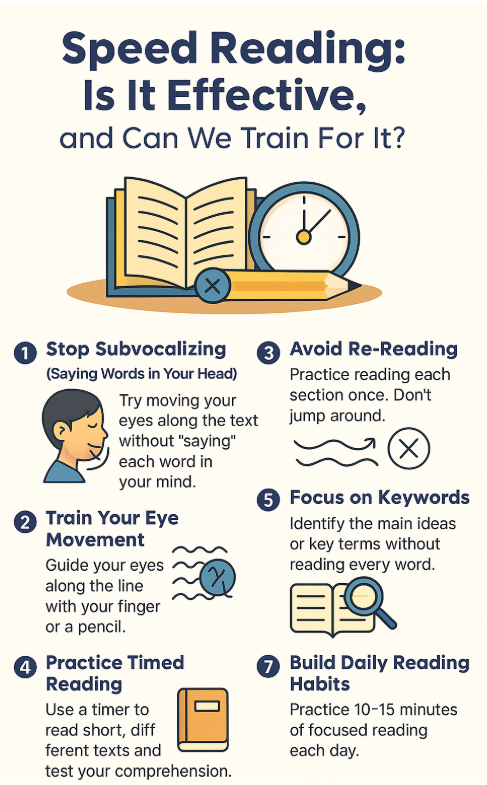
Figure 2: Tactical infographic mapping advanced mechanical pacing techniques used to block internal speech loops and expand horizontal peripheral tracking.
4. Applying Skimming to High-Stakes Question Types
In timed academic settings, skimming is never done in a vacuum; it serves as a pre-reading strategy to help you accurately answer target questions. When facing rigorous question variations that test your text validation skills, trying to process details before mapping the whole text leads directly to confusion.
Consider challenging logical validation evaluations, where you must determine if a specific claim is fully supported, explicitly contradicted, or completely absent from the text. Untrained readers usually dive straight into a paragraph looking for an exact word match, often falling into traps set by distracting synonyms. By skimming the text first, you map out the author's logic, allowing you to instantly identify which paragraphs contain the actual core argument.
Once your skim has pinpointed the correct section, you can transition from high-speed scanning to deep, microscopic analysis. This two-step approach ensures you spend your time evaluating the actual meaning of the passage rather than getting lost in irrelevant paragraphs. To master this strategic workflow on complex validation questions, read our detailed guide on how to Master True, False, Not Given Passages Legally.
5. Deliberate Practice Routines and Stamina Conditioning
Transitioning from a traditional reading style to an accelerated skimming technique requires consistent, deliberate practice. Your brain's visual pathways must be conditioned to handle increased tracking speeds. When you begin this training, expect to feel a sense of cognitive discomfort. This arises because your mind is unlearning decades of slow, linear habits. The key is to trust your peripheral vision and resist the urge to re-read sentences.
To build your reading stamina, use a strict digital countdown timer set to exactly 120 seconds for every text passage you practice on. Force your eyes through the three phases outlined above, and stop immediately when the alarm sounds, even if you are mid-paragraph. Afterward, quickly write down a three-bullet-point summary of the core concepts you gathered. This step reinforces active retention and ensures you are genuinely processing the text's structure rather than simply staring at lines of print.
Ready to put these pacing strategies to the test on complex academic material? Practice your technique on an unassisted text by exploring our Advanced Passage 4 Practice Evaluation. If you prefer a structured, multi-week schedule to build your speed step-by-step, follow the daily tracking routines found in our comprehensive Day 30 Speed Strategies Routine Tracker.
Video Tutorial: Eye Mechanics and Tracking Guides in Real Time
Watch this step-by-step video demonstration to see how using a physical pacer can expand your visual focus, minimize fixations, and help you systematically suppress subvocalization.
For deep access to scientific studies on visual word recognition and cognitive tracking speeds during high-velocity reading tasks, review the academic resource indexes hosted by the University of New South Wales (UNSW) Student Support Directory.
Frequently Asked Questions (FAQ)
Q: What is the primary operational difference between skimming and scanning?
A: Skimming is a global, active search strategy used to quickly capture the macro-level structure, central theme, and logical flow of a text. Scanning, by contrast, is a highly focused spotting strategy. When scanning, you ignore the surrounding context completely to locate a specific, isolated target, such as a percentage, a name, or a key date.
Q: Will rapid skimming negatively impact my absolute comprehension score?
A: Skimming is not intended to replace deep, thorough reading; it serves as its blueprint. By skimming a 900-word text first, you quickly map out where key ideas live. This initial overview saves you from getting bogged down in irrelevant paragraphs when you return to analyze specific points later.
Q: How can I actively suppress my inner voice when tackling complex text blocks?
A: Suppressing subvocalization requires forcing your visual tracking system to outrun your vocal speed. Use a physical guide, like a finger or pen tip, and sweep it across lines slightly faster than feels comfortable. Training yourself to focus on word groups rather than individual characters will help transition your mind into purely visual processing patterns.
Q: Can rapid skimming techniques be applied effectively to digital screens?
A: Yes, though screen reading introduces unique visual challenges like glare and scrolling fatigue. When skimming on digital devices, use your mouse cursor as a tracking guide to keep your place. Increasing the line spacing or zooming in slightly can also help expand your peripheral focus and keep your eyes moving smoothly.
Q: How do I know when to slow down my reading speed while skimming?
A: You should instantly reduce your speed when your eyes catch a major logical signpost or hit an entirely unfamiliar concept that directly answers a target question. Skimming maps the landscape; once you land on the specific spot containing the data you need, shift immediately into a slow, thorough analytical mode.


Comments