Heer Ranjha: The Eternal Love Story of Punjab
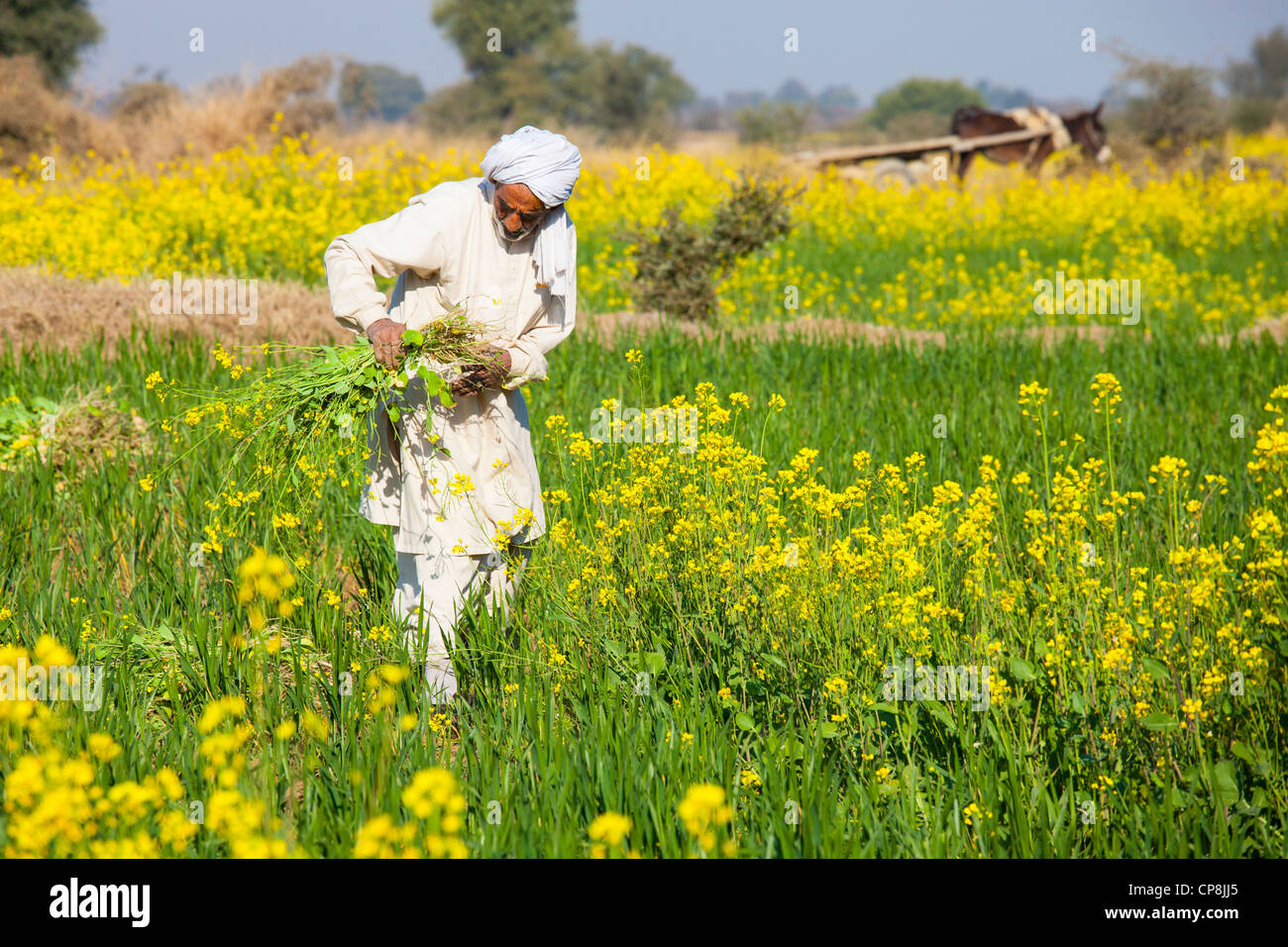
In the lush green plains of Punjab, where the Chenab River flows like a silver thread through golden mustard fields, lies one of the world's most poignant tales of love. Heer Ranjha is not just a story—it's a cultural heartbeat, a Sufi allegory of divine longing, and a timeless rebellion against societal chains. Penned most famously by the 18th-century poet Waris Shah in his epic poem Heer, this tragic romance has been sung by wandering minstrels, depicted in paintings, and celebrated in films for centuries.
The Golden Fields and the Flute Player
The story begins in the village of Takht Hazara, along the banks of the Chenab. Dheedo Ranjha, the youngest son of a prosperous Jat landowner named Mauju Chaudhry, lives a carefree life. Unlike his elder brothers who toil in the fields, Ranjha is pampered, spending his days playing the melodious flute (wanjhli) under shady trees. His music enchants all who hear it—birds pause, and even the river seems to slow its flow.
But fate is cruel. When Mauju dies, Ranjha's brothers and their wives turn against him. In Waris Shah's version, the sisters-in-law refuse to serve him food, sparking a bitter quarrel over inheritance. Heartbroken and betrayed by family, Ranjha abandons his home, carrying only his flute and the pain of injustice.
The First Glance That Changed Everything
Ranjha wanders until he reaches the village of Jhang, ruled by the powerful Sial clan. Exhausted, he rests in a beautiful garden owned by Chuchak Sial, a wealthy landlord. Here, fate orchestrates the meeting that would echo through centuries.
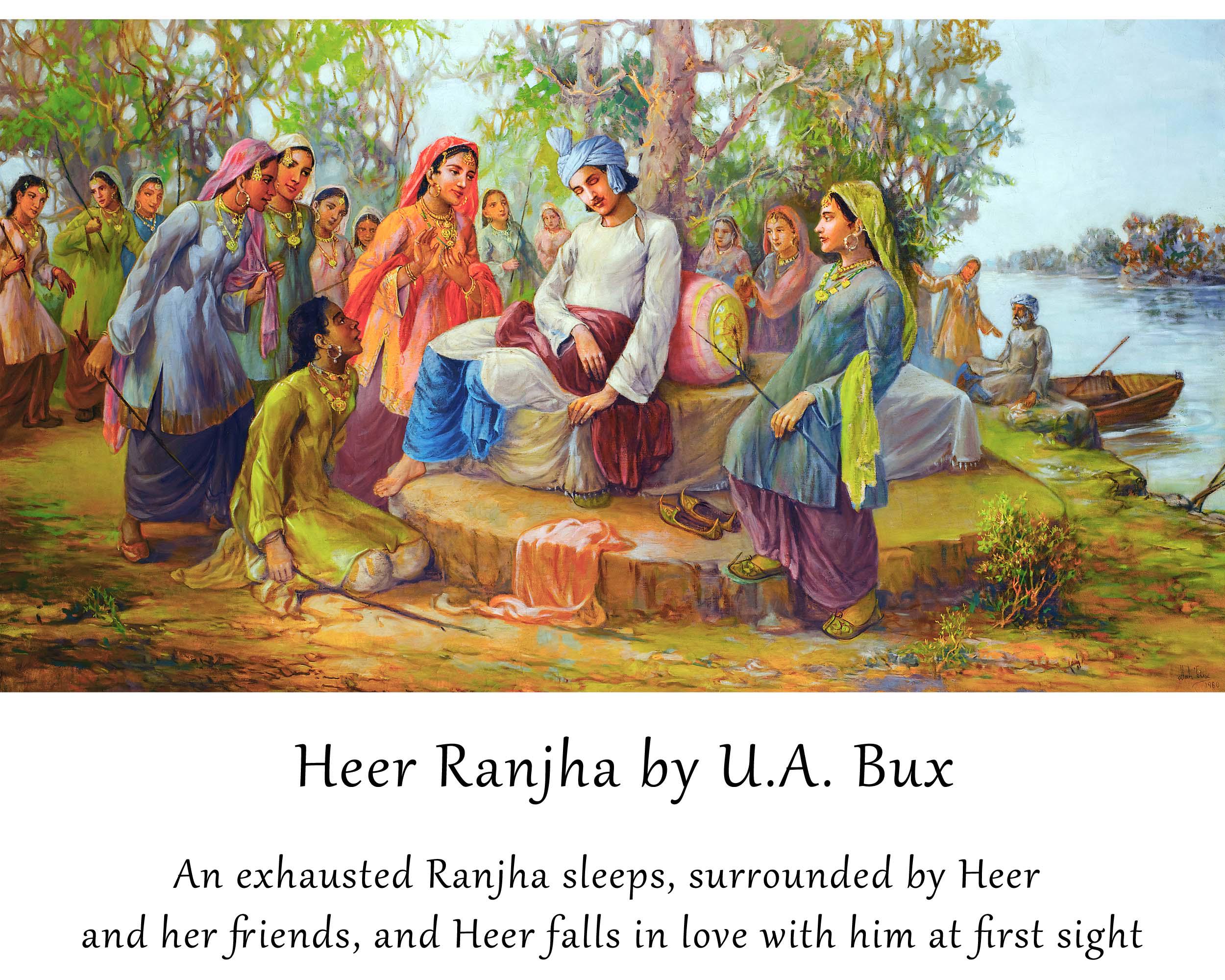
Heer, the only daughter of Chuchak, is renowned for her breathtaking beauty, intelligence, and strong spirit. One day, as she walks in the garden, she hears the haunting notes of a flute. Drawn like a moth to flame, she finds Ranjha asleep on her swing (palang). Their eyes meet—and in that instant, two souls recognize each other. Love blooms instantly, fierce and unbreakable.
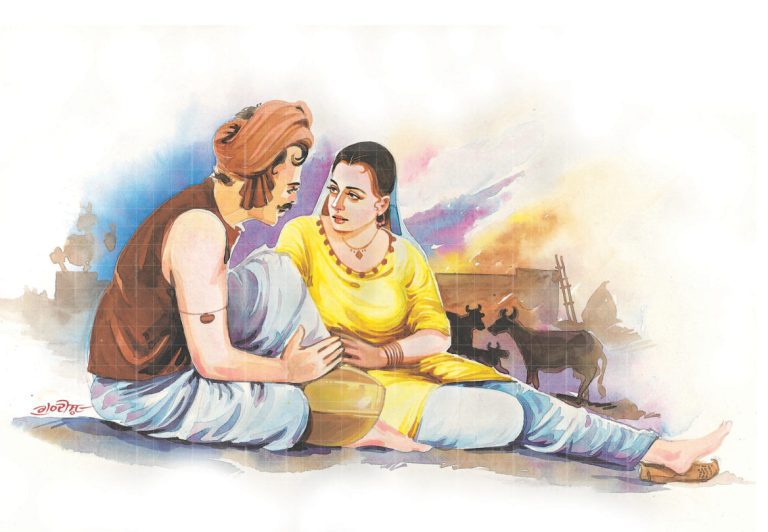
Heer offers Ranjha a job as caretaker of her father's cattle. He accepts, and the two spend stolen moments together among the buffaloes and mustard fields. Ranjha's flute now plays only for Heer, and she becomes his muse. Their love deepens into a sacred bond, defying class, clan, and convention.

Jealousy, Separation, and Sacrifice
But love in Punjab folklore is never easy. Heer's uncle, Kaidan, discovers their affair and stirs trouble. Heer's parents, fearing disgrace and the loss of social status, arrange her marriage to Saida Khera, a wealthy but unremarkable man from a neighboring clan.
Devastated, Heer is forced into the wedding. Ranjha, unable to bear the pain, leaves Jhang and becomes a jogi (ascetic) at Tilla Jogian, renouncing worldly life. He shaves his head, wears saffron robes, and wanders as a mendicant. Yet his heart remains tied to Heer.
Years pass. Heer, trapped in an unhappy marriage, sends messages through friends. She pleads for Ranjha to return. Eventually, disguised as a jogi, Ranjha arrives in Jhang. Heer recognizes him instantly. They plan to elope, but fate intervenes once more.
"Love is a fire that burns without fuel... Heer and Ranjha became one soul in two bodies." — Waris Shah
The Tragic Union in Death
On the day of Heer's forced reconciliation or final wedding rites, her jealous uncle poisons a laddu (sweet) meant for her. Heer eats it unknowingly. As she collapses, Ranjha rushes to her side. In agony, he takes the remaining poison and dies beside her.
In some versions, the lovers are buried together in Jhang, where their mausoleum stands today—a pilgrimage site for those seeking blessings in love. Waris Shah transformed this folk legend into a profound Sufi masterpiece, where earthly love mirrors the seeker's longing for God. Love, he teaches, transcends death, caste, and creed.

Why Heer Ranjha Endures
This story is more than romance—it's a mirror to Punjabi society. It challenges rigid family structures, caste divisions, and patriarchal control. Heer, as a strong female figure, chooses her heart over duty, while Ranjha sacrifices privilege for love. Waris Shah's poetry elevates it to spiritual heights: true love is a path to divine union.
Today, Heer Ranjha lives in qawwalis, Bollywood songs, and village gatherings. Lovers visit their tomb in Jhang, tying threads of hope. In an age of fleeting connections, this ancient tale reminds us that love can be revolutionary, painful, and eternal.
Word count: ~2500





No comments:
Post a Comment