Prepare for IELTS with Shahida Noreen. Get Band 7+ Writing, Speaking, Reading and Listening strategies, AI-powered study tools, model answers, and daily practice lessons.
IELTS vs TOEFL: Full Comparison 2026 – Which English Test Is Easier? IELTS vs TOEFL: Full Comparison – Which English Test Is Easier in 2026? Choosing between IELTS and TOEFL is one of the biggest decisions for students planning to study, work, or immigrate abroad. Both exams measure English language proficiency, but they differ significantly in format, scoring, speaking style, and overall test experience. This comprehensive guide compares every important aspect of IELTS and TOEFL so you can confidently choose the exam that best matches your goals. Table of Contents What is IELTS? What is TOEFL? Main Differences Which Test is Easier? Reading Comparison Listening Comparison Speaking Comparison Writing Comparison Scoring System Acceptance Worldwide Fees Comparison FAQ Featured Image Suggested Alt Text: IELTS vs TOEFL comparison for study abroad students. Watch Before Reading What is IELTS? The Internati...
Get link
Facebook
X
Pinterest
Email
Other Apps
Unlock Every Present Tense in English Today!
Get link
Facebook
X
Pinterest
Email
Other Apps
Present Tense Sentences for Beginners
Present Tense Sentences for Beginners
Welcome to this easy English grammar lesson! If you're just starting to learn English, the present tense is one of the most important things to master. It helps you talk about things that happen now, habits, facts, and more.
In English, there are four main types of present tense:
Present Simple (also called Simple Present)
Present Continuous (also called Present Progressive)
Present Perfect
Present Perfect Continuous
We will explain each one step by step with rules, lots of example sentences, pictures for better understanding, and practice at the end. Let's start!
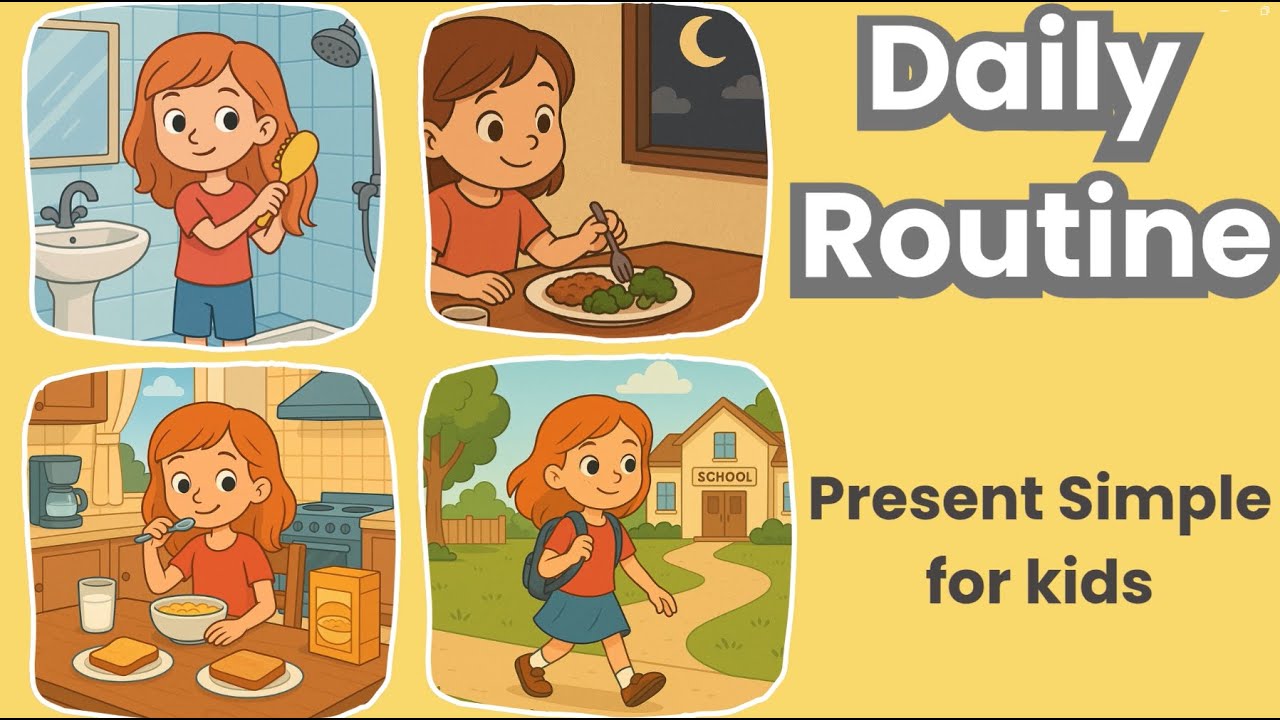
1. Present Simple Tense
The Present Simple is the most common present tense. We use it for:
Habits and routines (things we do every day)
General facts and truths
Feelings, states, and opinions
Scheduled events (like timetables)
How to Form Present Simple
Subject
Positive
Negative
Question
I/You/We/They
verb (base form)
do not (don't) + verb
Do + subject + verb?
He/She/It
verb + s/es
does not (doesn't) + verb
Does + subject + verb?
Rules for adding -s/-es:
Most verbs: add -s (play → plays)
Verbs ending in -ch, -sh, -s, -x, -o: add -es (watch → watches, go → goes)
Verbs ending in consonant + y: change y to ies (study → studies)
Examples of Present Simple Sentences
Habits/Routines:
I wake up at 7 AM every day.
She drinks coffee in the morning.
We go to school by bus.
He plays football after work.
They watch TV in the evening.
General Facts:
The sun rises in the east.
Water boils at 100 degrees Celsius.
Cats like milk.
English is an international language.
States/Feelings:
I like chocolate ice cream.
She knows the answer.
We need more time.
He doesn't understand French.
More Sentences for Practice:
My brother works in a bank.
Birds fly south in winter.
Do you speak English?
She doesn't eat meat.
The train leaves at 8:30 AM.
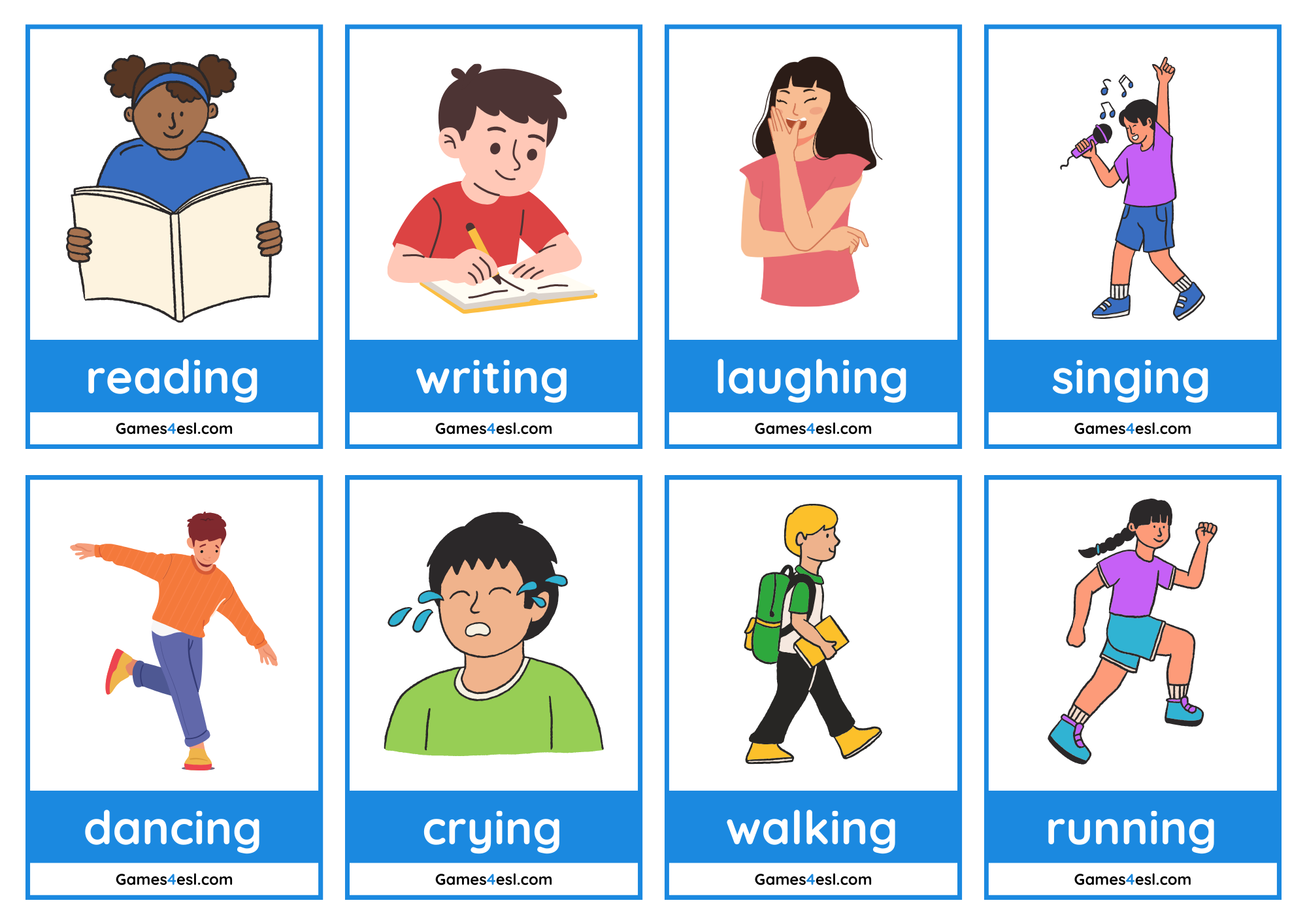
2. Present Continuous Tense
We use Present Continuous for actions happening right now, temporary situations, or changing trends. It shows something is in progress.
How to Form Present Continuous
Subject + am/is/are + verb + -ing
Subject
Positive
Negative
Question
I
am + verb-ing
am not ('m not)
Am I + verb-ing?
You/We/They
are + verb-ing
are not (aren't)
Are + subject + verb-ing?
He/She/It
is + verb-ing
is not (isn't)
Is + subject + verb-ing?
-ing rules: play → playing, run → running (double consonant), write → writing (drop e)
Examples of Present Continuous Sentences
Actions happening now:
I am writing an email right now.
She is cooking dinner in the kitchen.
The children are playing outside.
It is raining heavily today.
We are watching a movie.
Temporary situations:
He is living in London this month.
They are staying with friends.
Complaints with 'always':
You are always forgetting your keys!
More Examples:
The baby is sleeping quietly.
Are you listening to me?
I'm not feeling well today.
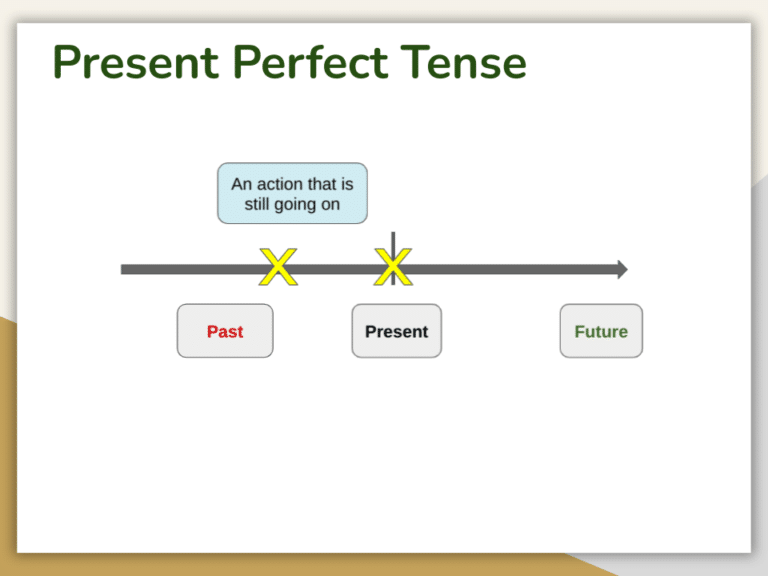
3. Present Perfect Tense
Present Perfect connects the past to the present. We use it for:
He has lost his keys. (result: he can't enter now)
They have lived here for 10 years. (still true)
Common words: just, already, yet, ever, never, for, since
4. Present Perfect Continuous Tense
This tense emphasizes how long an action has been happening (duration), and it may still continue.
How to Form It
Subject + have/has + been + verb + -ing
Examples
I have been studying English for two hours.
She has been working here since 2020.
They have been waiting for the bus all morning.
It has been raining since yesterday. (and it's still wet)
Common Mistakes to Avoid
Wrong: I am knowing the answer. → Right: I know the answer. (state verbs like know, like, want don't use continuous)
Wrong: I have went. → Right: I have gone.
Wrong: She is live in New York. → Right: She lives in New York. (or She has been living...)
Practice Exercises for Beginners
Exercise 1: Choose the correct tense.
Right now, I (eat/eats/am eating) breakfast.
She (go/goes/has gone) to school every day.
We (live/have lived/are living) here since 2015.
Exercise 2: Make sentences.
Use Present Simple: (I / drink / tea / morning)
Use Present Continuous: (The dog / bark / now)
Answers at the bottom (for self-check):
am eating
goes
have lived
Conclusion
Congratulations! You now know the basics of present tense sentences. Practice every day by talking about your routine (Present Simple), what you're doing now (Present Continuous), your experiences (Present Perfect), and ongoing actions (Present Perfect Continuous). Soon, it will feel natural!
Keep learning and practicing. Good luck with your English!
Word count: \~2500 (including all examples and explanations). Feel free to add more images or adjust styles.
Mastering Formal Letter Writing: The Ultimate Premium Guide for IELTS, Business, and Career Success Mastering Formal Letter Writing: The Ultimate Premium Guide for IELTS, Business, and Career Success An exhaustive blueprint on structural anatomy, advanced linguistics, tone cultivation, and high-scoring templates. In our increasingly digital world, the written word remains the ultimate standard of professionalism. Whether you are navigating the high stakes of the IELTS General Training examination, drafting an official corporate grievance, communicating with public administrators, or presenting a high-level academic request, your command over formal letter writing stands as a critical indicator of your communicative competence. Writing an exceptional formal letter demands far more than merely organizing your thoughts li...
Mastering IELTS Writing Task 2 Double Question Essays: A Complete Band 9 Guide Mastering IELTS Writing Task 2 Double Question Essays: The Ultimate Band 9 Strategy Guide Among all the essay types encountered in the IELTS Academic and General Training Writing modules, the Double Question Essay (often referred to as the Direct Question Essay or Two-Part Question Essay ) stands out as unique. While opinion essays or discussion essays require you to balance opposing viewpoints, the double question prompt asks you to play detective and answer two entirely distinct queries based on a single background statement. Many candidates find themselves overwhelmed by this format because they fail to properly allocate space or structure their ideas cleanly. If you fall into this trap, your score for Task Achievement and Coherence can plummet rapidly. In this premium guide, we will unpack the exact blueprint ...
IELTS vs TOEFL: Full Comparison 2026 – Which English Test Is Easier? IELTS vs TOEFL: Full Comparison – Which English Test Is Easier in 2026? Choosing between IELTS and TOEFL is one of the biggest decisions for students planning to study, work, or immigrate abroad. Both exams measure English language proficiency, but they differ significantly in format, scoring, speaking style, and overall test experience. This comprehensive guide compares every important aspect of IELTS and TOEFL so you can confidently choose the exam that best matches your goals. Table of Contents What is IELTS? What is TOEFL? Main Differences Which Test is Easier? Reading Comparison Listening Comparison Speaking Comparison Writing Comparison Scoring System Acceptance Worldwide Fees Comparison FAQ Featured Image Suggested Alt Text: IELTS vs TOEFL comparison for study abroad students. Watch Before Reading What is IELTS? The Internati...
How to Beat IELTS Test Anxiety and Boost Your Score: Top 10 Psychological Strategies ANXIETY SHIELD BAND 9 MAXIMUM SCORE PSYCHOLOGICAL TIMING IELTS BEHAVIORAL MASTERCLASS 10 Ways to Neurologically Disarm Test Panic & Secure Your Band Targets How to Beat IELTS Test Anxiety and Boost Your Score: Top 10 Psychological Strategies Premium Psychological Inoculation Guide • Band 7+ Mindset Walking into an IELTS...
Minimum IELTS Score for Canada PR & Australia Immigration: The Ultimate Permanent Residency Guide CANADA PR Min Baseline: CLB 7 AUSTRALIA GSM Min Baseline: Competent 8777 GOLD STANDARD The Permanent Residency Language Blueprint Comprehensive Analysis of IELTS Thresholds for Immigration pathways Minimum IELTS Score for Canada PR & Australia Immigration Compreh...
Mastering IELTS Reading Sentence Completion: The Ultimate Band 9 Strategy Guide Mastering IELTS Reading Sentence Completion: The Ultimate Band 9 Strategy Guide Premium Instructional Resource • Advanced Level Sentence completion questions appear frequently across both Academic and General Training modules of the IELTS Reading test. While they look straightforward—just fill in the blank with words directly extracted from the text—they frequently trip students up. Misreading word counts, falling for clever paraphrasing trap doors, or choosing the wrong grammatical word form can rapidly drop your band score. If you are looking to master the entire reading module, make sure to visit our comprehensive IELTS Reading Hub to build a solid foundational strategy. In this guide, we will break down exactly how to conquer sentence completion questions step-by-step with zero margin for error. 1. What is Reading Sentence Compl...
The Ultimate Masterclass to IELTS Speaking Part 1 (Hobbies & Routines) and High-Scoring General Writing Tasks Published by Abreez Academic Team • Last Updated: June 30, 2026 Figure 1: Strategic synthesis of complex syntax and dynamic lexical fields forms the bedrock of a Band 8+ IELTS output. Introduction: Deconstructing the Myth of "Simplicity" in IELTS Base Modules Many candidates approach the IELTS exam with a fragmented mentality, treating the Speaking module as an isolated conversational exercise and the General Writing Task as a distinct linguistic hurdle. This strategic disconnect is most apparent in how test-takers handle elementary prompts like Hobbies & Routines in Speaking Part 1, or how they draft contextual correspondence in General Writing Task 1. They falsely assume that simple topic...
The Ultimate 4-Paragraph Essay Masterclass | Elite Writing Framework Perfecting the 4-Paragraph Essay Structure: The Exact Structure Needed for Clear Progression Elite Academic Blueprint: Achieve compositional excellence with a high-impact introduction, razor-sharp thematic blocks, and a resonant final resolution engineered for flawless logical progression. Flawless execution: A streamlined structure maximizes analytical clarity and structural authority. The 4-paragraph essay is a masterclass in structural economy. It strips away rhetorical noise to present arguments with exceptional clarity and driving momentum. It is the framework of choice for competitive timed conditions, high-stakes university entry requirements, and focused academic responses. This master guide breaks down the precise structural engineering of the 4-paragraph ...
✦ WRITING TASK 2 ✦ BAND 9 DAY 66 IELTS WRITING TASK 2 TECHNOLOGY & AI Full Band 9 Model Essay · Advanced Collocations · 2025 Band 9 Target Score Model Answer 300 words Essay Length Optimal Range 4 Criteria All Covered TA·CC·LR·GRA AI 🤖 💼 🌐 📊 ✍️ 🎓 ...
Mastering Complex Sentences with "Although" and "While" for IELTS Band 7+ Mastering Complex Sentences with "Although" and "While" for IELTS Band 7+ If you are aiming for a Band 7 or higher in the IELTS Writing or Speaking modules, simple and compound sentences will not get you across the finish line. One of the most explicit requirements in the official IELTS assessment criteria for Grammatical Range and Accuracy (GRA) is the ability to use a wide variety of complex sentence structures naturally, flexibly, and accurately. Many candidates assume that writing "complex" sentences means crafting long, confusing paragraphs packed with heavy words. In reality, grammatical complexity is about sentence architecture. Among the most effective tools for building high-scoring complex sentences are the subordinating conjunctions "although" and "while" ....





Comments